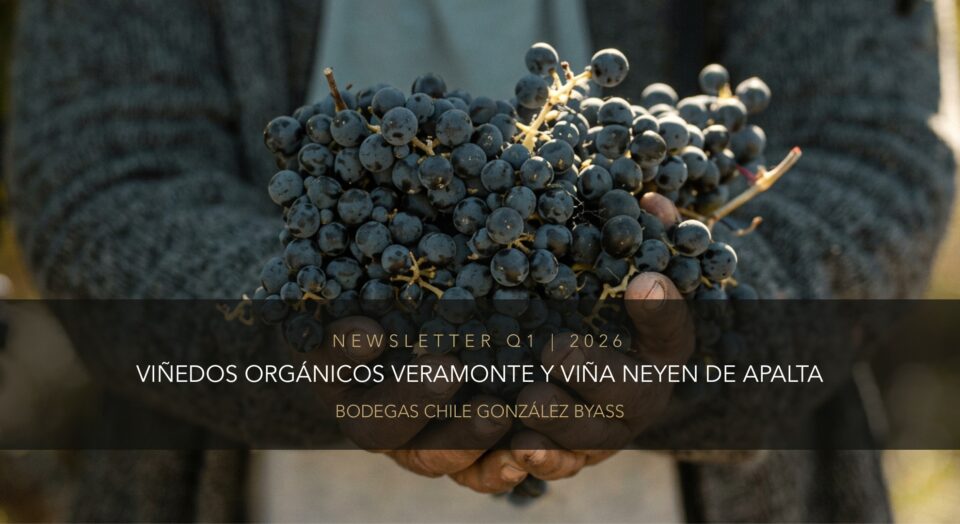
Hoy celebramos un año compartiendo con ustedes las novedades de Viñedos Orgánicos Veramonte y Viña Neyen de Apalta. Nos llena de orgullo dar continuidad a este Newsletter, que refleja el compromiso y esfuerzo de todos por mantenernos informados sobre las actividades en los distintos mercados, fortaleciendo así nuestra visibilidad y asegurando que estemos siempre comunicados y alineados.
El inicio de este año ha presentado desafíos. Sin embargo, hemos logrado estar más cohesionados y comunicados, lo que representa una valiosa oportunidad que hemos sabido aprovechar.
En el marco de nuestra estrategia de Sostenibilidad 360° y nuestra filosofía de “Suelos Vivos”, nos enorgullece compartir que hemos cumplido con los compromisos de protección ambiental establecidos en nuestra Política de Calidad, Medio Ambiente y Seguridad Alimentaria. Este logro es resultado del trabajo y la dedicación diaria de todos nuestros colaboradores, quienes han contribuido activamente al cumplimiento de los objetivos propuestos.
La vendimia en Chile comenzó en febrero, y nuestro Gerente General y enólogo, Gonzalo Bertelsen, comparte su visión sobre la temporada:
En la D.O. Casablanca, donde se ubica Viñedos Orgánicos Veramonte, tuvimos un invierno con precipitaciones dentro de lo normal y buenas horas de frío. Esto permitió una adecuada infiltración de agua y el desarrollo de abundante cobertura vegetal natural. La primavera se presentó sin heladas, lo que se ha traducido en una mejor producción por hectárea en comparación con años anteriores.
Durante el verano, las temperaturas han sido moderadas, con días soleados y noches frías, condiciones ideales para la madurez y sanidad de las uvas. Tras tres semanas de cosecha, ya hemos finalizado la vendimia de Chardonnay y Pinot Noir, y nos encontramos a mitad de la cosecha de Sauvignon Blanc. La próxima semana será el turno del Viognier, y posteriormente abordaremos las variedades tintas más tardías, como Cabernet Franc, Syrah y Merlot.
Observamos un cierto adelanto en la madurez de los azúcares, que no necesariamente va acompañado de la madurez fenólica, ni de la evolución del pH y la acidez. Por ello, será clave actuar con cautela al momento de cosechar, para evitar vinos excesivamente vegetales o con notas verdes y fenólicas. Es posible que esta temporada derive en vinos con un grado alcohólico ligeramente superior al de otros años, aunque aún es pronto para confirmarlo. En las variedades tintas tardías, detectamos un adelanto de entre dos y tres semanas, algo inusual para el clima frío del valle de Casablanca, pero que podría ser positivo para trabajar la fineza de los taninos.
En el valle de Colchagua, específicamente en la D.O. Apalta, donde se ubica Viña Neyen de Apalta, el invierno presentó precipitaciones adecuadas, superando los 600 mm, junto con buenas horas de frío. Estas condiciones favorecieron la infiltración de agua y el desarrollo de una rica cobertura vegetal, en línea con nuestra filosofía de LIVING SOILS.
La cosecha comenzó el jueves 19 de marzo con el Malbec, la joya de este viñedo ancestral en Apalta. Nos encontramos en fechas normales de inicio, aunque estimamos un mayor volumen de uva en comparación con otras temporadas, gracias a las buenas condiciones invernales y al manejo sustentable de los suelos.
Este inicio de vendimia ha estado marcado por cierta inestabilidad climática, con lluvias recientes y pronóstico de chubascos dando la partida al otoño. Nos mantenemos atentos, monitoreando constantemente las condiciones. Aun así, proyectamos una muy buena temporada. Nos encontramos en la recta final, afinando taninos, concentrando los vinos y trabajando en la elegancia que caracteriza a estas parras resilientes y fieles.
Esperamos que disfruten la lectura de nuestro Newsletter del Q1.
Today, we celebrate one year of sharing with you the latest updates from Viñedos Orgánicos Veramonte and Viña Neyen de Apalta. We are proud to continue this newsletter, which reflects everyone’s commitment and effort to stay informed about activities across different markets, strengthening our visibility and ensuring we remain connected and aligned.
The beginning of this year has brought challenges. However, we have become more cohesive and better connected, which represents a valuable opportunity that we have successfully leveraged.
Within the framework of our 360° Sustainability strategy and our Living Soils philosophy, we are proud to share that we have fulfilled the environmental protection commitments established in our Quality, Environmental, and Food Safety Policy. This achievement is the result of the daily work and dedication of all our collaborators, who have actively contributed to meeting our objectives.
The harvest season in Chile began in February, and our General Manager and Winemaker, Gonzalo Bertelsen, shares his perspective on the season:
In the D.O. Casablanca, home to Viñedos Orgánicos Veramonte, winter rainfall was within normal levels, accompanied by good chilling hours. This allowed for proper water infiltration and the development of abundant natural vegetation cover. Spring came without frost, resulting in improved yield per hectare compared to previous years.
During the summer, temperatures have been moderate, with sunny days and cool nights, ideal conditions for grape ripeness and health. After three weeks of harvest, we have already completed the Chardonnay and Pinot Noir harvests and are currently halfway through Sauvignon Blanc. Viognier will follow next week, and later we will move on to the later red varieties such as Cabernet Franc, Syrah, and Merlot.
We are observing an advance in sugar ripeness that is not necessarily aligned with phenolic maturity or the evolution of pH and acidity. Therefore, it will be key to act cautiously when deciding harvest timing to avoid overly vegetal wines or those with green and phenolic notes. This season may result in wines with slightly higher alcohol levels than in previous years, although it is still too early to confirm. For the later red varieties, we are seeing a harvest advance of two to three weeks, unusual for Casablanca’s cool climate, but potentially beneficial for achieving finer tannins.
In the Colchagua Valley, specifically in the D.O. Apalta, home to Viña Neyen de Apalta, winter rainfall exceeded 600 mm, along with good chilling hours. These conditions supported water infiltration and the development of rich vegetation cover, in line with our Living Soils philosophy.
Harvest began on Thursday, March 19th, with Malbec, the jewel of this ancestral vineyard in Apalta. We are within normal timing for the start of harvest, although we expect a higher grape volume compared to previous seasons, thanks to favorable winter conditions and sustainable soil management.
This early stage of harvest has been marked by some climatic instability, with recent rainfall and forecasted showers marking the beginning of autumn. We remain attentive, constantly monitoring conditions. Even so, we anticipate a very promising season.
We are now entering the final stretch, refining tannins, concentrating the wines and working towards the elegance that characterizes these resilient and distinctive vines.
We hope you enjoy reading our Q1 Newsletter.